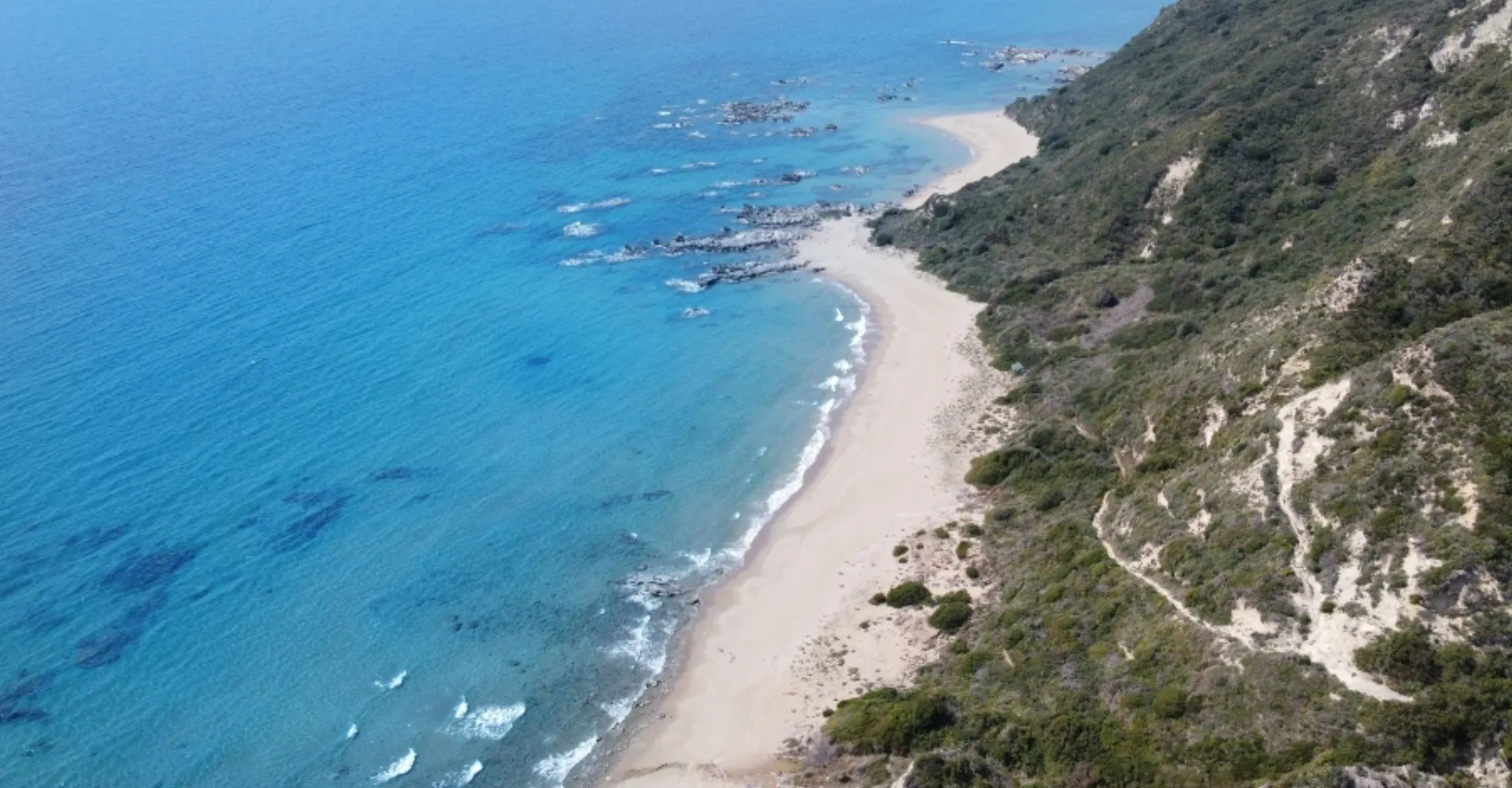
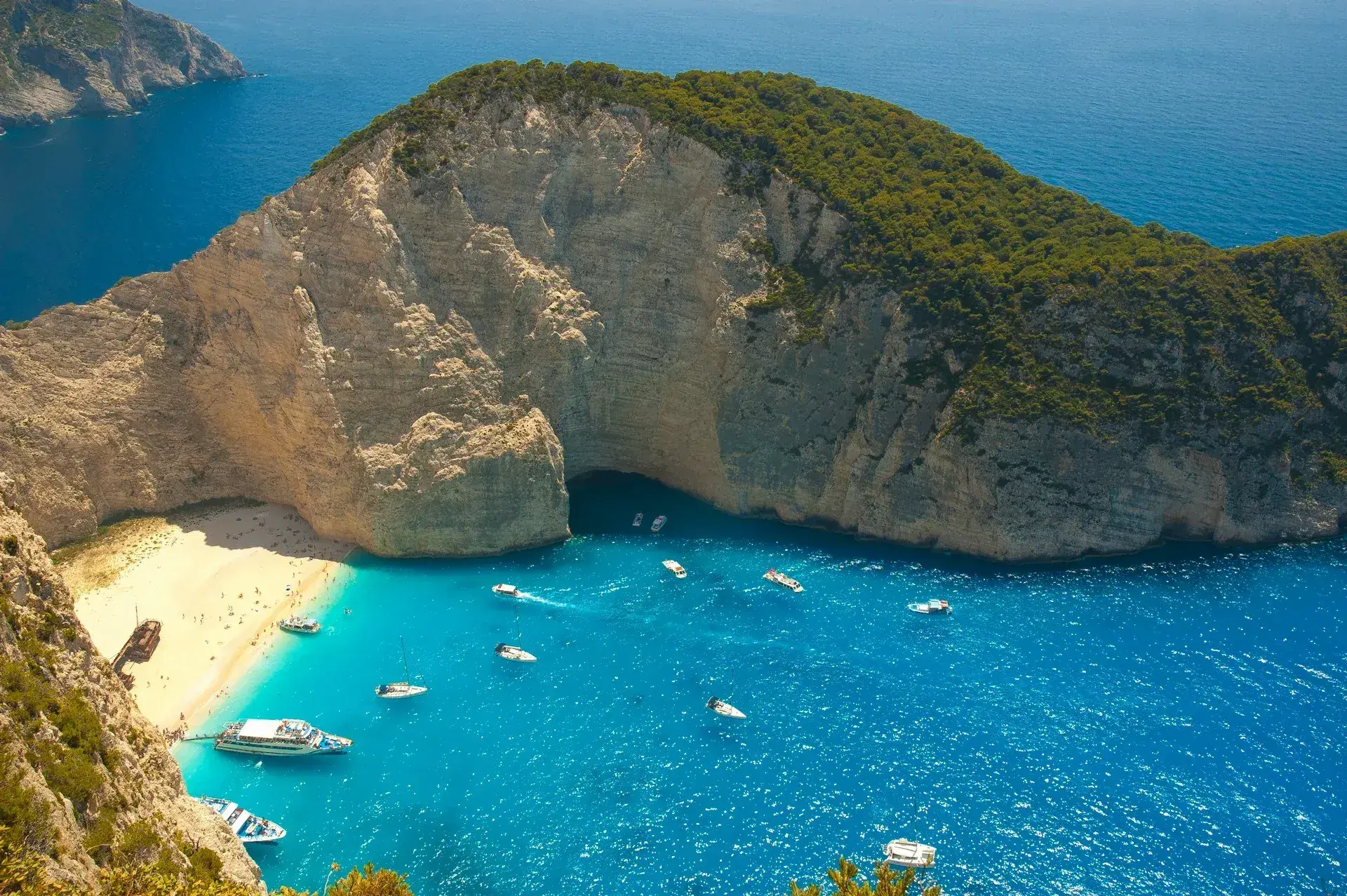
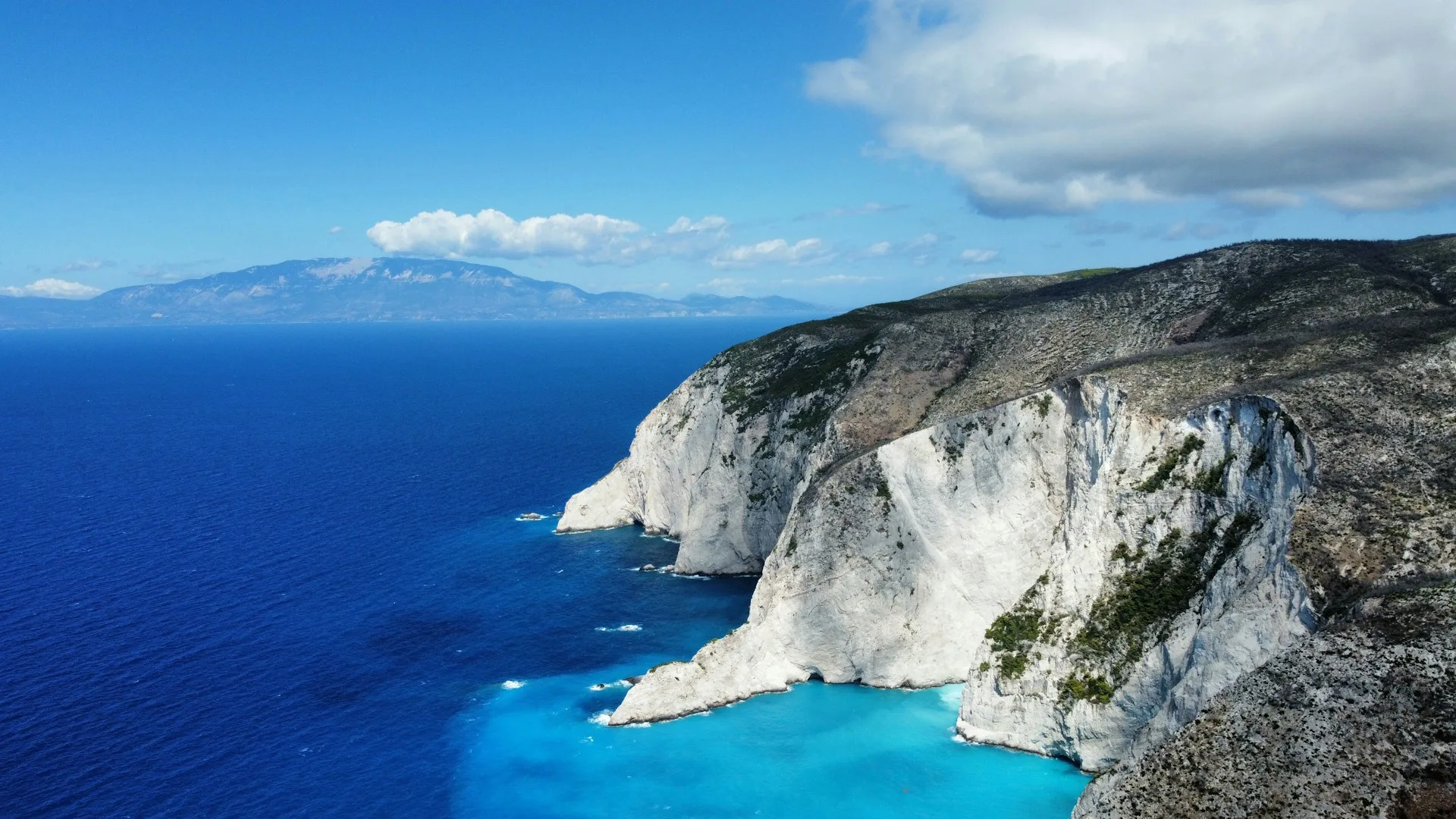
Come early morning when the water is completely still — the reflection of the limestone cliffs in the glass-calm sea creates mirror images that look computer-generated.
Vromoneri — The Pristine Pebble Cove
The south coast of Zakynthos, between the turtle beaches and the rocky southwest, holds a few secrets that only the genuinely curious discover. Vromoneri is one of them — a small pebble cove tucked beneath limestone bluffs where the water achieves a clarity and colour that makes photographers doubt their own eyes.
Quick Facts
| Fact | Detail |
|---|---|
| 📍 Location | South coast, near Vasilikos |
| 🏖️ Type | White and grey pebbles |
| 📏 Length | ~80 m |
| 🌊 Water | Exceptional (pale turquoise to deep blue) |
| 🏊 Swimming | Excellent |
| ☀️ Season | May-October (morning best for still water) |
| 🅿️ Parking | Top of cliff (5 min walk down) |
| 🍴 Service | None (wild beach) |
| 👶 Kids | Moderate (steep access, no facilities) |
| 🐢 Wildlife | Undisturbed marine life, good for snorkeling |
What Awaits You
A compact beach of rounded white and grey pebbles, perhaps 80 metres long, enclosed on both sides by low limestone cliffs. The sea here is extraordinary — a progression from pale turquoise at the shore through deepening blues to an almost purple intensity further out. The pebble bottom keeps the water cleaner than sandy beaches, and the absence of regular foot traffic means the marine environment directly offshore is essentially undisturbed.
There are no facilities — not even a bin. What there is: silence, space, and one of the most aesthetically perfect small beaches on the island. The cliffs behind provide morning shade; in the afternoon the sun reaches the full beach length. Flat pebbles, while less comfortable to walk on than sand, make excellent seats once you’ve found the right configuration.
Getting There
Vromoneri is reached from the road that runs between Vassilikos village and the Gerakas area on the southern peninsula. Look for an unsigned track leading toward the coast — the beach is visible from the clifftop above. The track is short but steep; most visitors park at the top and walk down (5 minutes). The descent is manageable but requires sensible footwear.
Alternatively, in peak season, small boat taxi services occasionally run from Agios Sostis or the harbour areas to the more remote southern beaches — ask locally.
Snorkelling
The water clarity at Vromoneri is exceptional. The underwater topography immediately offshore features flat limestone slabs interspersed with sand patches — excellent habitat for fish, sea urchins, and the occasional octopus. Visibility of 15-20 metres is typical in summer. Bring a mask.
The Name
“Vromoneri” means “smelly water” in Greek — a name that gives many first-time visitors pause. The origin is likely a historical sulphur spring that once seeped near the waterline; today the water is clean and odourless. The name has stuck regardless, which perhaps helps keep the crowds away. Consider it a bonus.
Facilities
Vromoneri is a wild beach with no commercial facilities. There are no sunbeds, no beach bars, no toilets, and no services. The name (“smelly water”) refers to the natural sulphur springs that seep into the sea here, creating the characteristic smell that greets you on arrival.
Bring everything you need: water, food, sun protection, and snorkelling gear. The springs make the water chemistry slightly unusual — the visibility is good but the smell is noticeable. The nearest facilities are at the main Xigia beach area, a short distance to the north.
Best Time to Visit
May through September. The beach is at its finest in early morning, when the sea is flat and the light is soft. June is perfect — the water has warmed from its winter temperature, the crowds are manageable, and the vegetation on the cliffs behind is still green. August mornings can feel almost too perfect.